
The Definitive Guide to High-Performance Superplasticizers for Concrete and Mortar
Concrete is the most widely used construction material in the world, but the demands placed upon it are increasing at an unprecedented rate. Modern infrastructure projects—from high-rise towers and long-span bridges to precision-engineered precast elements—require concrete mixes that exhibit exceptional workability, superior mechanical strength, long-term durability, and sustainability.
In this context, Polycarboxylate Ether (PCE) powder has emerged as a groundbreaking class of superplasticizers that fundamentally redefines how concrete and mortar perform. With its advanced polymer design, PCE powder enables the production of high-strength, high-flow concrete using significantly less water, without compromising on setting times or structural performance.
The following comprehensive guide delves deep into what PCE powder is, how it works, its key advantages over traditional admixtures, detailed application scenarios, specific technical benefits, and why ZOVAE is the trusted choice for construction professionals globally.
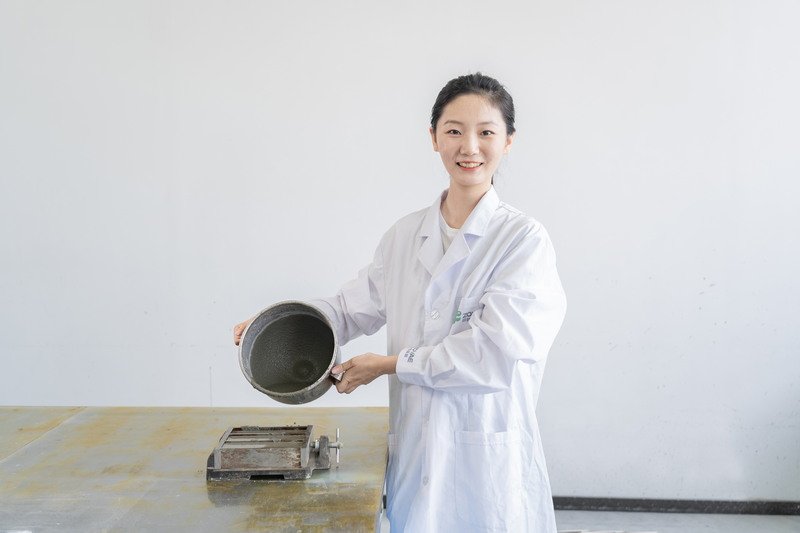
State-of-the-art testing facilities ensuring consistent quality and performance standards for every batch of PCE powder.
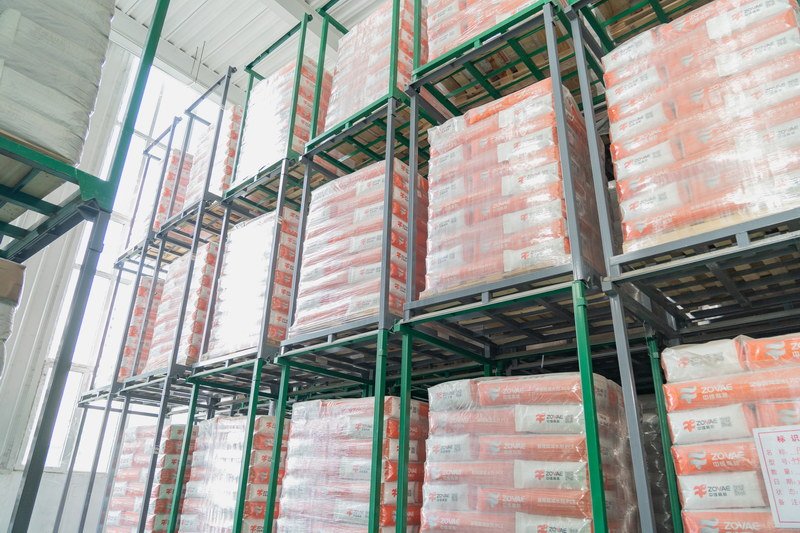
Engineered packaging solutions designed to maintain product integrity during storage and transportation.
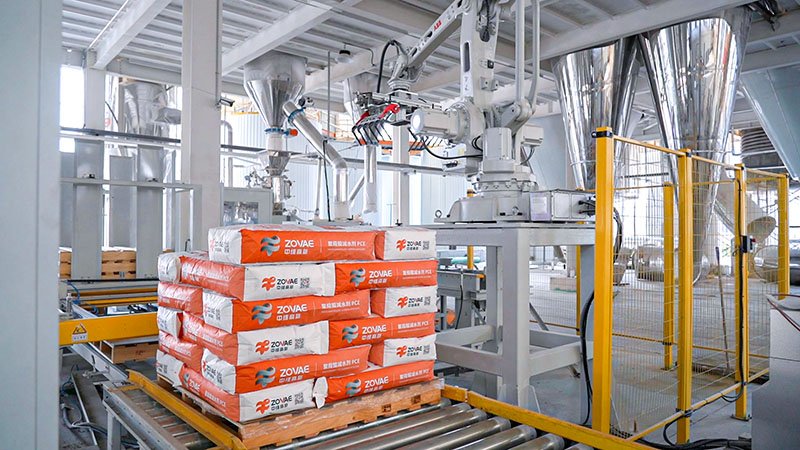
Large-scale manufacturing capabilities ensuring consistent supply for major construction projects worldwide.
Polycarboxylate Ether powder is a new-generation high-range water-reducing admixture (HRWR) used to enhance cement-based materials. Produced through advanced polymerization techniques, PCE belongs to the family of comb-shaped superplasticizers, with a backbone that attaches to cement particles and side chains that repel other particles, allowing for improved dispersion.
Unlike older superplasticizers such as sulfonated naphthalene formaldehyde (SNF) or melamine-based additives, PCE operates at the molecular and colloidal levels to achieve unprecedented workability and water reduction performance.
While PCE is available in liquid form, the powdered variant offers unique storage, transportation, and dosing advantages—particularly in dry-mix plants, remote job sites, or applications where precise batching is essential.
Powdered PCE maintains stability over longer periods and can be pre-mixed with other powdered materials without affecting performance, making it the preferred choice for specialized applications.
At its core, the comb polymer structure of PCE acts through steric hindrance and electrostatic repulsion, creating a sophisticated dispersion mechanism that revolutionizes concrete performance.
The anionic backbone of the PCE polymer attaches firmly to positively charged cement grain surfaces.
Long polyethylene glycol (PEG) side chains project outward into the cement pore solution.
This structure prevents re-agglomeration of cement particles, ensuring maximum hydration efficiency.
By effectively dispersing cement particles, PCE minimizes the amount of water required for lubrication between particles. This allows construction professionals to achieve water reductions of up to 30% or more while maintaining or even increasing workability.
With particle separation, each grain of cement hydrates more uniformly, leading to a denser microstructure and superior long-term strength. This also contributes to enhanced durability, lowering permeability and increasing resistance to aggressive chemical attacks.
Concrete containing PCE powder is easier to mix, pump, and place. The homogeneous dispersion of cement particles eliminates "dead zones" in mixers, enables smoother finishes, and reduces the incidence of honeycombing and segregation.
By lowering the water-to-cement ratio without impacting slump, PCE creates a denser, more robust cement paste, directly contributing to higher compressive and tensile strengths.
One of PCE's most important characteristics is its ability to maintain workability over extended time frames, invaluable for ready-mix concrete transported over long distances and large pours requiring extended handling.
PCE performs exceptionally well in blends containing fly ash, silica fume, slag, or metakaolin, enhancing both fresh and hardened properties across diverse applications.
From self-consolidating concrete (SCC) to ultra-high-performance concrete (UHPC), PCE powder supports precast/prestressed elements, infrastructure requiring high early strength, and marine-resistant structures.
By reducing cement content required to achieve target strengths, PCE helps lower the carbon footprint of concrete production, aligning with green building certifications like LEED and BREEAM.

Comprehensive testing protocols ensure every batch meets stringent performance standards and specifications.
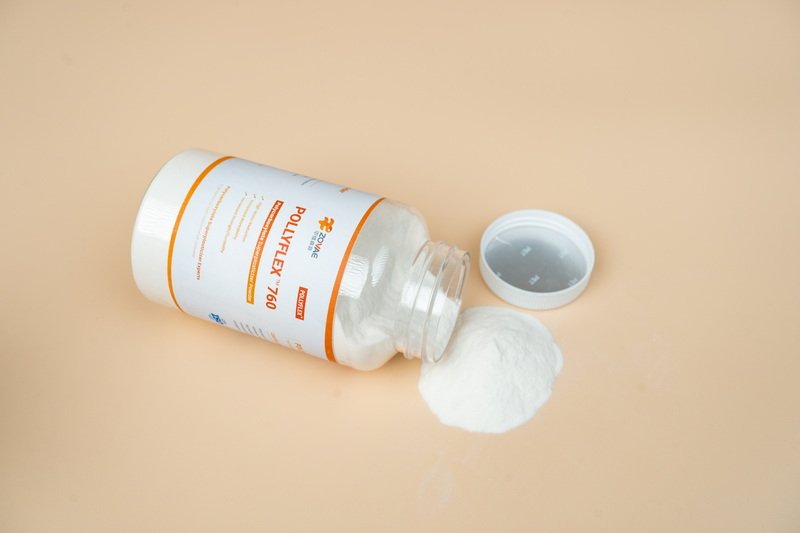
Advanced formulation delivering exceptional water reduction and superior workability enhancement for demanding applications.
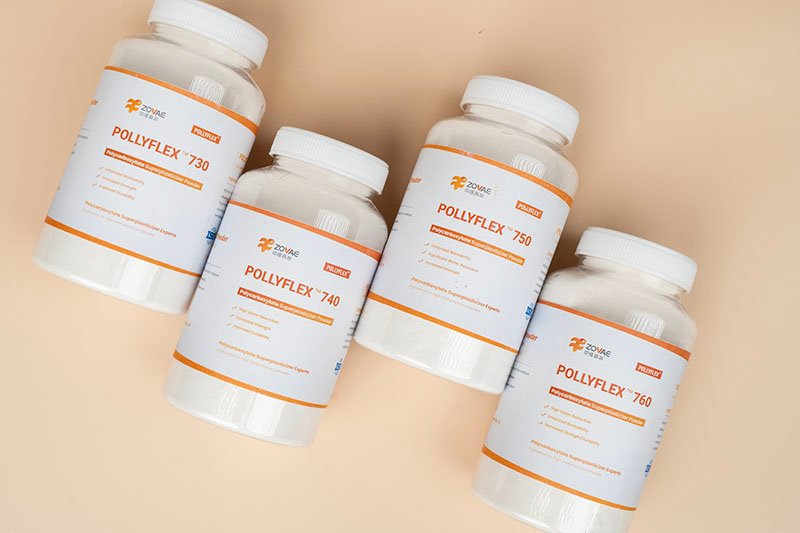
Comprehensive range of polycarboxylate superplasticizers engineered for diverse construction applications and performance requirements.
PCE powder is introduced during mixing, either dry-blended with cementitious materials or dissolved in water first.
Negatively charged polymer molecules bind to cement particle surfaces through electrostatic attraction.
Electrostatic and steric repulsion forces push particles apart, reducing flocculation and improving flow.
With particles separated, less water is needed for the mix to flow freely and achieve desired workability.
Improved dispersion exposes more cement surface area to water, yielding a denser gel structure after hardening.
Enhances consistency across truckloads, maintains pumpability, and prevents slump loss during long hauls. Essential for urban construction projects requiring extended transport times.
Speeds up mold filling without vibration in SCC applications, reduces production cycles, and ensures high surface quality for architectural elements.
Crucial for meeting performance specifications in infrastructure, industrial flooring, and structural elements subjected to extreme loads and environmental conditions.
Integrates seamlessly with dry admixture systems for tile adhesives, grouts, plasters, and water-resistant putties—improving open time and workability.
| Performance Property | Typical Improvement with PCE Powder |
|---|---|
| Water Reduction | 25–35% |
| Slump Retention (2 hours) | Maintains ≥80% initial slump |
| Compressive Strength (28 days) | +15% to +40% increase |
| Initial Set Time Adjustment | None to minimal |
| Compatibility with SCMs | Excellent across all types |
By reducing cement content required to achieve target strengths, PCE helps lower the carbon footprint of concrete production. Less energy is consumed for similar structural capacity, aligning with green building certifications like LEED and BREEAM. This technology supports the construction industry's transition toward more sustainable practices without compromising performance standards.
Years of R&D in construction chemicals with worldwide distribution network and deep understanding of regional construction practices.
Rigorously tested formulations to ensure consistent performance in every batch, backed by comprehensive quality control systems.
Custom molecular designs for specific project requirements, allowing optimization for unique construction challenges and specifications.
Professional consultation from mix design to on-site troubleshooting, ensuring optimal performance throughout your project lifecycle.
Polycarboxylate Ether (PCE) powder represents not just a product, but a technological leap in how modern construction can approach performance, efficiency, and sustainability. With its unmatched water-reducing ability, superior slump retention, and adaptability across a wide range of applications, PCE technology is a cornerstone of next-generation concrete innovation.
When partnering with ZOVAE, you gain more than a material supplier—you secure a technical partner dedicated to helping you achieve construction excellence in every project.